스페이셜 링크
Spatial Link
사업 내용
Project Description
〈무등산 아카이브〉는 사진가 임채욱이 포착한 광주 동구와 무등산의 풍경을 메타버스 공간 속에서 재구성한 가상 전시 공간이다. 한국의 산을 오랜 시간 기록해 온 작가의 시선을 통해 구현된 “무등산 아카이브”는, 변화무쌍한 자연의 아름다움과 더불어 광주의 정신을 디지털 기술로 재해석한다. 관람객은 실제와 유사한 감각적 환경 속에서 사진과 공간, 사운드가 교차하는 다감각적 몰입의 경험을 체험하게 된다.
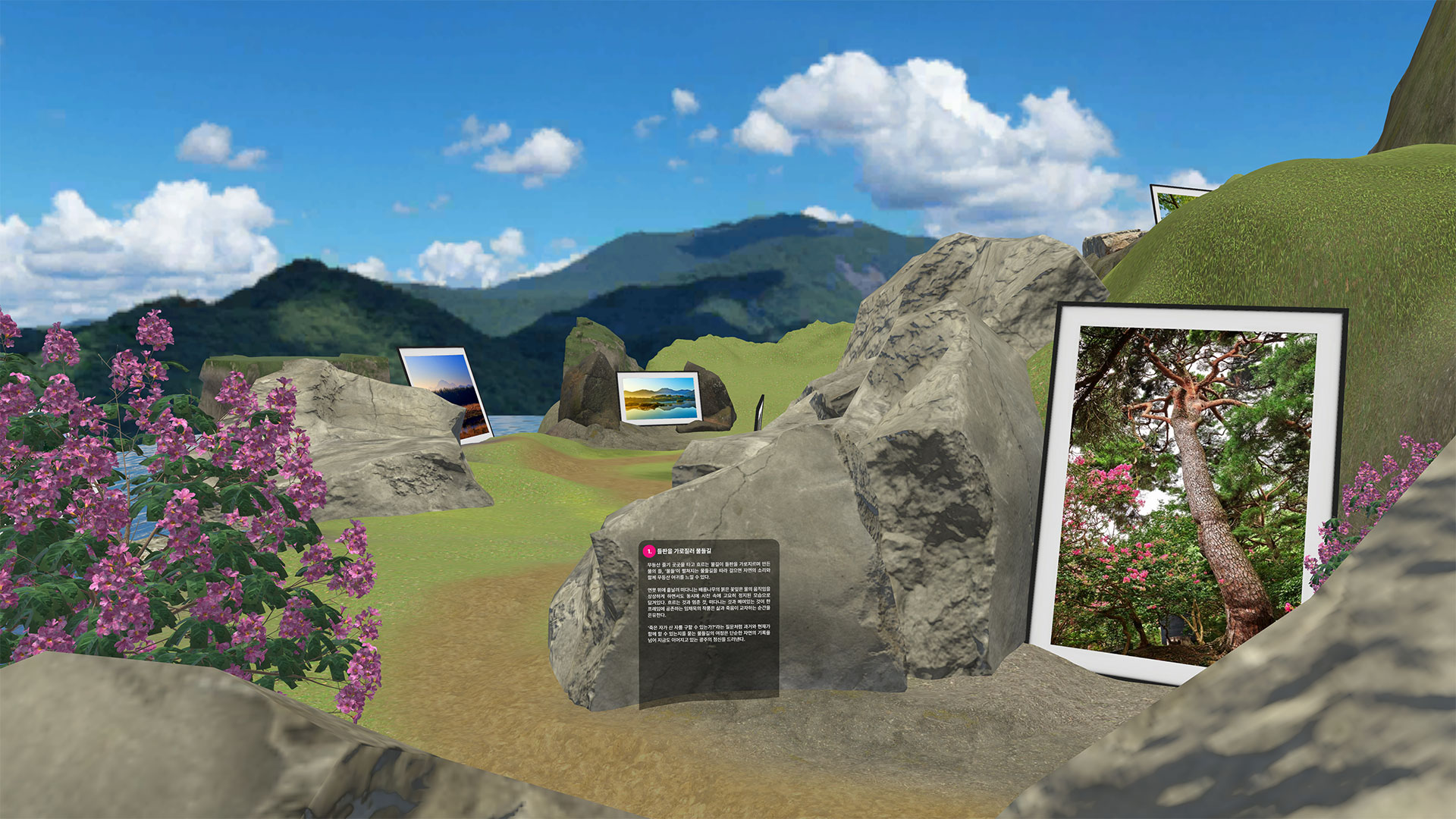
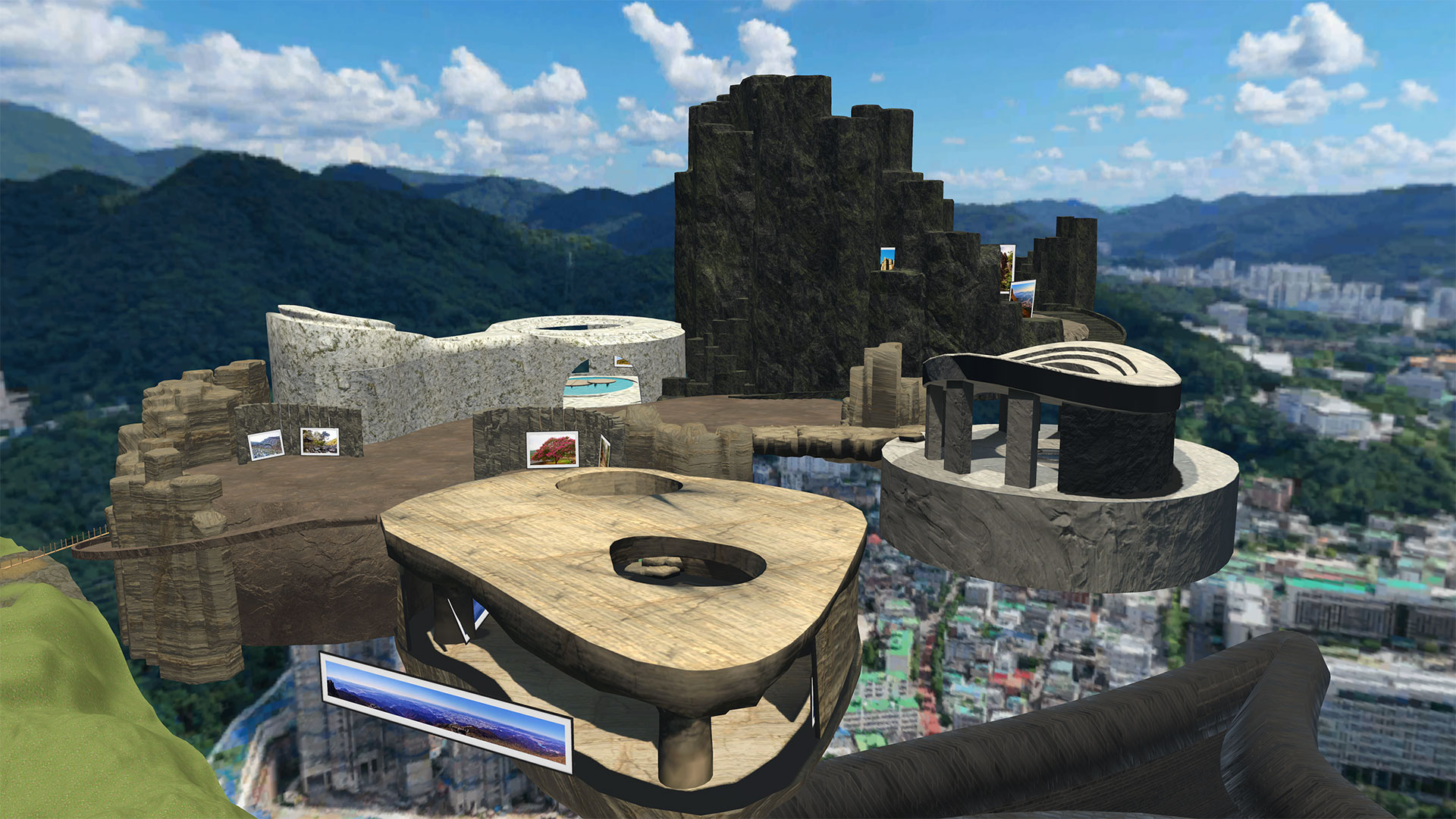
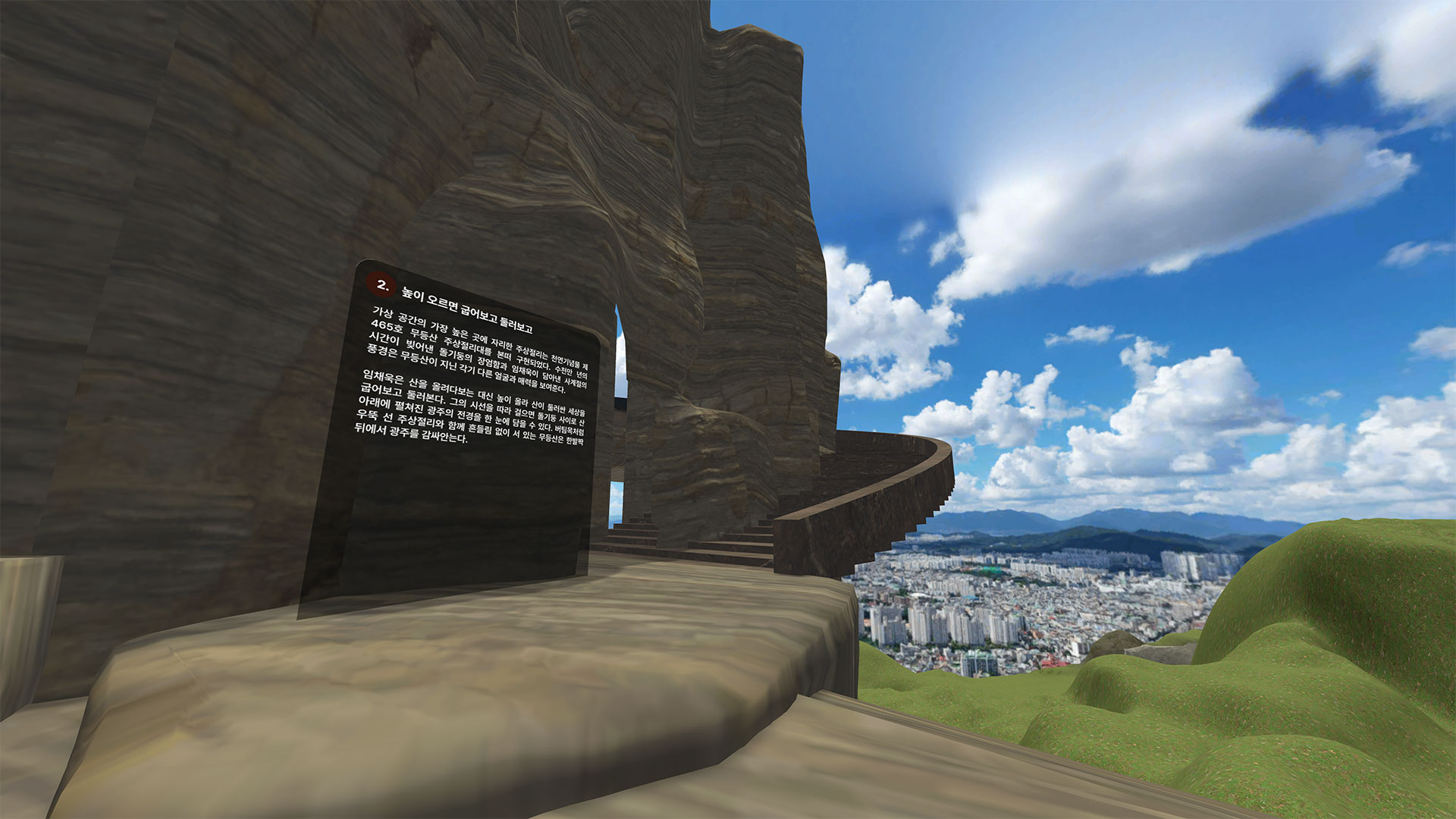
본 공간은 세 개의 디지털 공간으로 구성된다. 첫 번째 공간은 물들길(Water Trail)로, 산의 초입을 따라 흐르는 물길과 들판의 풍경을 기반으로 한다. 작가가 포착한 무등산의 자연경관이 원본 사진 데이터를 바탕으로 사실적으로 복원되어, 관람객은 마치 산의 입구를 직접 거니는 듯한 생생한 감각을 경험한다. 두 번째 공간은 주상절리 구간(Columnar Joint Section)으로, 천연기념물 제465호인 무등산 주상절리대를 실제 지형 데이터를 참고해 디지털화하였다. 이곳에서는 사계절의 변화 속에서 무등산의 절경과 광주 시내 전경이 펼쳐지며, 관람객은 산 정상에서 도시를 조망하는 듯한 체험을 하게 된다.
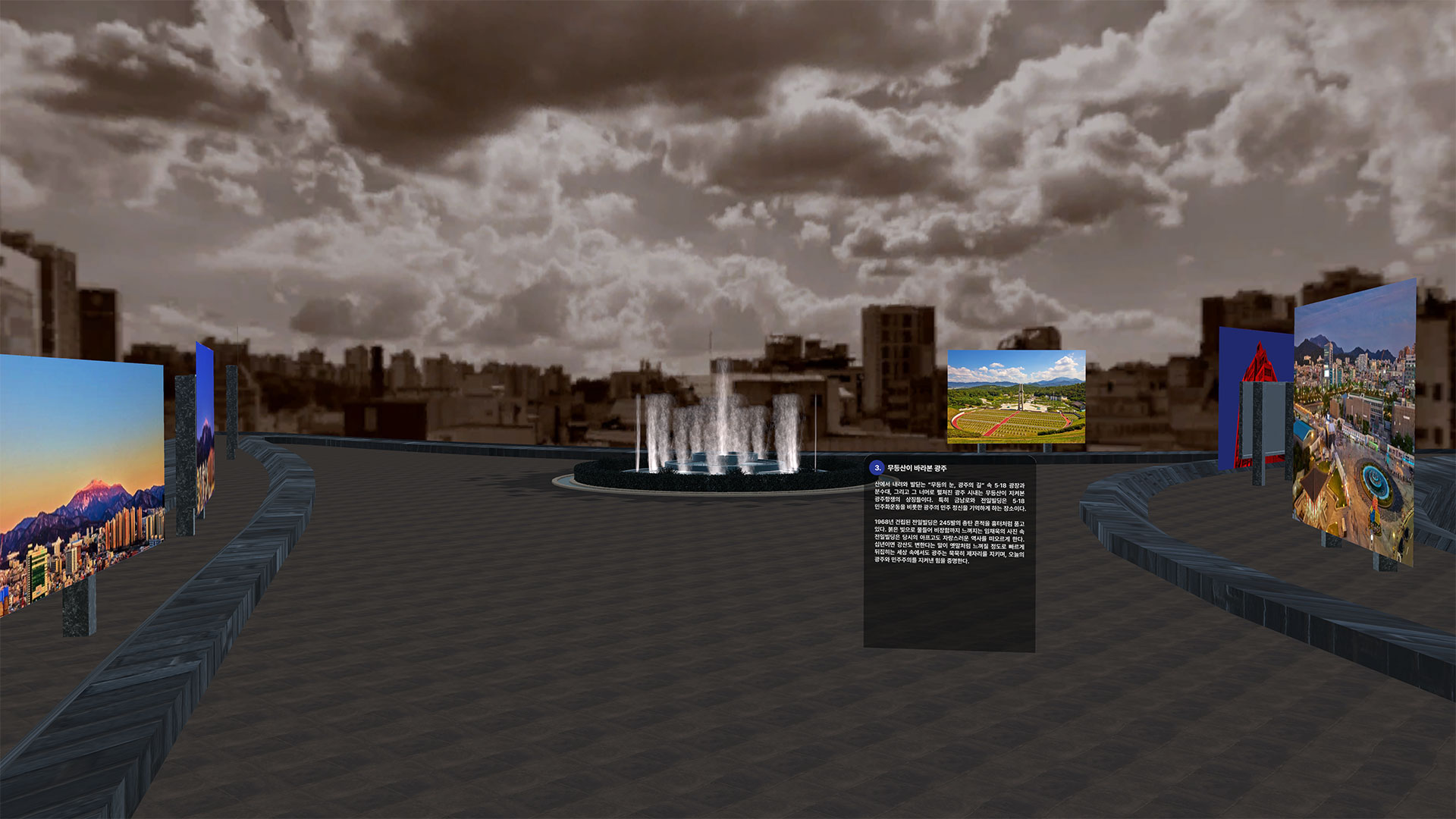
마지막 세 번째 공간은 지하의 5·18 민주광장(May 18 Memorial Space)으로 구성되어 있다. 광주 도심을 담은 스카이박스와 실제 현장의 환경음을 기반으로 한 사운드 구성이 결합되어, 관람객은 임채욱의 사진을 통해 오늘의 광주 속에서 역사의 기억을 다시 마주하게 된다. 사용자는 아바타 내비게이션을 통해 무등산의 초입에서 주상절리, 그리고 5·18 민주광장으로 이어지는 경로를 자유롭게 이동하며 감상할 수 있다. 각 지점의 공간 음향은 작품의 이미지와 주변 환경에 따라 변화하며, 관람의 몰입도를 극대화한다. 특히 주상절리대에서 지하 민주광장으로 이동하는 구간에서는, 시점이 산의 정상에서 도심으로 전환되며 광주의 상징적 지점인 전일빌딩이 시야에 들어온다.
〈무등산 아카이브〉는 단순히 풍경사진을 진열하는 가상 갤러리가 아니라, 무등산의 시선으로 광주를 바라보고, 광주의 기억을 통해 무등산을 다시 해석하는 메타버스 기반의 예술 공간이다. 이곳에서 무등산은 더 이상 배경이 아니라, 도시를 지탱하고 기억을 품은 존재로 기능한다. 관람은 시각적 경험을 넘어 기억과 감정의 확장으로 이어지며, 산과 도시, 자연과 역사, 이미지와 사운드가 교차하는 복합적 서사를 구성한다. “무등산 아카이브”는 이러한 체험을 통해 광주정신을 동시대의 감각 속에서 재활성화하고, 디지털 기술을 매개로 한 새로운 ‘기억의 경관’(landscape of memory)을 경험하게 한다.
Mudeungsan Archive is a virtual exhibition space that reconstructs the landscapes of Gwangju’s Dong-gu district and Mudeungsan Mountain as captured by photographer Lim Chae-wook within a metaverse environment. Realized through the perspective of an artist who has long documented the mountains of Korea, “Mudeungsan Archive” reinterprets the ever-changing beauty of nature and the spirit of Gwangju through digital technology. Visitors experience a multisensory immersion where photography, spatial composition, and sound intersect within a realistic digital environment.
The exhibition consists of three digital spaces. The first, Water Trail, is based on the streams and fields at the foot of the mountain. The natural scenery of Mudeungsan, captured by the artist, is faithfully reconstructed from original photographic data, allowing visitors to feel as if they are walking through the mountain’s entrance. The second, Columnar Joint Section, digitally recreates the Mudeungsan Columnar Joint Cliff, designated as Korea’s Natural Monument No. 465, using actual topographic data. Here, the scenery of Mudeungsan unfolds through the four seasons, offering a panoramic view of Gwangju as if observed from the mountain peak.
The third and final space, May 18 Memorial Space, is set underground. A skybox capturing the cityscape of Gwangju is combined with ambient sound recordings from real locations, allowing visitors to confront the living memory of history through Lim Chae-wook’s photographs. Using avatar navigation, visitors can freely explore the path from the mountain entrance through the columnar joints down to the May 18 Memorial Plaza. The spatial soundscape changes according to each location’s imagery and atmosphere, enhancing the sense of immersion. In the transition from the columnar joints to the underground plaza, the viewpoint shifts from the mountain summit to the urban landscape, revealing Gwangju’s symbolic landmark, the Jeonil Building.
Mudeungsan Archive is not a virtual gallery for landscape photography but a metaverse-based art space that views Gwangju through the eyes of the mountain and reinterprets the mountain through the city’s collective memory. Here, Mudeungsan no longer functions merely as a backdrop but as a living presence that sustains the city and holds its memories. The viewing experience extends beyond the visual, becoming an expansion of memory and emotion where mountain and city, nature and history, image and sound converge into a complex narrative. Through this immersive experience, “Mudeungsan Archive” revitalizes the spirit of Gwangju in the sensibility of the present and evokes a new “landscape of memory” shaped by digital technology.
참여자
Participants
임채욱
동양화과를 졸업했으나 붓이 아닌 카메라로 작업하는 작가이다. 설악산을 비롯해 북한산, 지리산, 덕유산, 무등산 등 한국 산을 미학적으로 탐구하며 산의 모습과 기운을 표현한다. 사진을 한지에 출력해 매끈하지 않은 섬유결과 인쇄 과정에서 생기는 우연한 구김을 그대로 활용하여 회화에 질감과 입체적 조형 요소를 작품에 부여하는 것이 작업의 특징이다.
Lim Chae-Wook
Although Lim Chae-Wook majored in Oriental painting, he works not with a brush but with a camera. He conducts an aesthetic exploration of Korean mountains—including Seoraksan, Bukhansan, Jirisan, Deogyusan, and Mudeungsan—seeking to express both their forms and their vital energy. By printing photographs on hanji (traditional Korean paper) and making active use of its uneven fibers and the incidental creases produced in the printing process, he imparts painterly textures and three-dimensional sculptural qualities to his works.